


|


|
INQUIRY
|
|

|

|
|
|
The events industry is known as one of the largest contributors to waste, from the use of single-use plastics and non-recyclable decorations to large amounts of food waste. Amidst growing awareness of environmental issues, the concept of a green event organiser is becoming a solution that is not only relevant but also urgently needed.
A green event organiser is an event planning and execution service that prioritises environmentally friendly and sustainable principles. Its primary focus is reducing negative impacts on the environment through waste management, energy efficiency, and the use of eco-friendly materials.
The concept of green tourism is increasingly relevant in the era of sustainability and ESG (Environmental, Social, and Governance), where companies are required not only to be successful in business but also to be environmentally responsible.
Modern companies are turning to green events for several strategic reasons:
Events are now more than just promotional activities, but also tools for communicating corporate values.
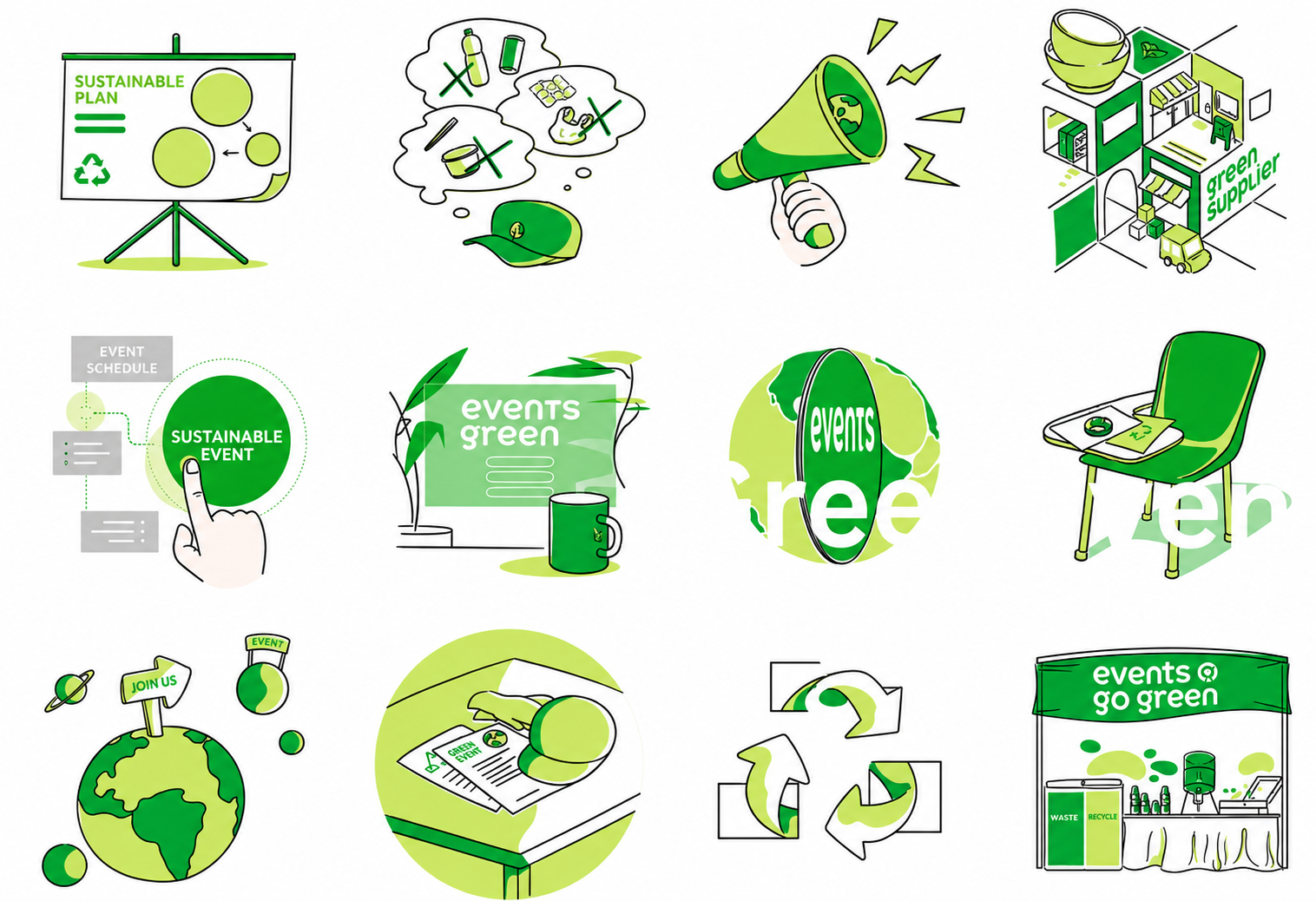
For an event to be considered environmentally friendly, several principles must be implemented:
Waste reduction is the main foundation of organising a green event. This principle emphasises efforts to minimise waste from the planning stage, not just during execution. For example, by avoiding the use of single-use plastics, replacing decorations with reusable materials, and providing a system for separating organic and inorganic waste at the event location. The zero-waste approach also encourages collaboration with vendors who share similar commitments, making the entire event production chain more environmentally responsible.
Energy efficiency in green events aims to reduce the consumption of electricity and other energy resources without sacrificing the quality of the event. This can be achieved by using energy-efficient equipment, maximising natural lighting, or choosing a venue that meets green building standards. Furthermore, some events are starting to switch to renewable energy sources such as solar panels as an alternative power source. This step not only reduces operational costs but also reduces the carbon emissions generated by the event.
The choice of materials used in an event has a significant impact on sustainability. Green events prioritise the use of materials that are recyclable, biodegradable, or have a low carbon footprint. Examples include the use of recycled paper for printed materials, fabric instead of plastic banners, or decorations made from natural materials. By choosing the right materials, an event not only looks professional but also reflects a true commitment to environmental conservation.
Transportation is often the largest contributor to emissions at an event, both from the participant and logistics perspective. Therefore, green events encourage the use of more environmentally friendly transportation, such as shared shuttles, electric vehicles, or event locations that are easily accessible by public transportation. Furthermore, organisers can reduce travel needs by utilising digital technologies, such as live streaming or hybrid events. This strategy helps reduce the carbon footprint while increasing mobility efficiency.
Green events focus not only on environmentally friendly operations but also on changing participant behaviour. Through education and campaigns integrated into the event, participants are encouraged to understand the importance of environmental protection and contribute directly. This can be done through educational signage, short workshops, or interactive activations that engage the audience. With this approach, the impact of green events becomes broader because it does not stop at the event itself, but also influences the long-term habits of participants.
As a green event organiser, the services offered typically include:
The initial stage of green event organiser services is developing an event concept that aligns with sustainability principles and the client's business goals. This includes determining the theme, event format (offline, hybrid, or digital), and strategies for reducing environmental impact from the outset. During this process, organisers will identify potential sources of emissions and waste, then design more efficient and environmentally friendly solutions without compromising the quality of the attendee experience.
During the production stage, all technical elements of the event are implemented with an eco-friendly approach, from vendor selection and material use to operational systems on-site. For example, using reusable decorations, energy-efficient equipment, and avoiding the use of single-use materials. Green event organisers typically have a network of vendors who understand sustainability standards, ensuring a professional and environmentally responsible production process.
Waste management is a key service in green events. Organisers will establish a clear waste separation system, including organic, inorganic, and special waste. Furthermore, they also collaborate with waste management agencies or recycling communities to ensure that the waste generated does not end up in landfills without processing. With a structured system, events can operate with zero waste principles, or at least as close as possible.
This service focuses on measuring the carbon footprint generated from all event activities, including transportation, energy consumption, and logistics. This data is then analysed to determine the extent of the environmental impact. Some green event organisers also offer carbon offset options, such as tree planting or contributions to environmental programs, as a form of compensation for emissions.
To strengthen their social and environmental impact, green event organisers typically involve local communities or environmental organisations in the event's implementation. This collaboration can include community-based waste management, environmental education for participants, and follow-up programs such as tree planting or community empowerment. This approach not only enhances the event's credibility but also ensures that its positive impact is sustainable and directly felt by the surrounding environment.
Here are some examples of effective green event implementations:
This concept not only reduces environmental impact but also increases participant engagement.
Green events are part of a company's CSR strategy, particularly in the environmental aspect. Within the ESG framework:
Therefore, green events are not just a trend, but part of a sustainable business strategy.
Using the services of a green event organizer offers several advantages:
This is especially important for companies that want to make events part of their CSR strategy.
Green events can be implemented in various types of events:
Each event can be tailored to meet business objectives and environmental impact targets.
Implementing a green event organiser concept is no longer just a trend, but a necessity amidst growing awareness of the importance of sustainability. Every small decision in event planning, from material selection and waste management to energy efficiency, has a real impact on the environment. With the right approach, you can not only create a memorable event but also contribute to a better future. If you want to present a professional and environmentally friendly event without the hassle of organising everything yourself, we are ready to help you design and execute a sustainable event concept that is effective, measurable, and tailored to your event needs.
|
Get an interesting News & Updates
|
|
Luvisa is an event organizer service provider in Jakarta for corporate events, schools, outbound unique concepts with complete event documentation. Our crews will arrange the events in accordance with your requirements and free to open a discussion about the ideas. We committed to bring out the unforgettable experience on provided event with our solid and creative people.
|


|
| Copyright © 2026. Luvisa Jasa Event Organizer (EO), Outbound Profesional di Jakarta. All Rights Reserved |


|


 @organizerluvisa